

Side Awnings – Screen for Balcony or Patio
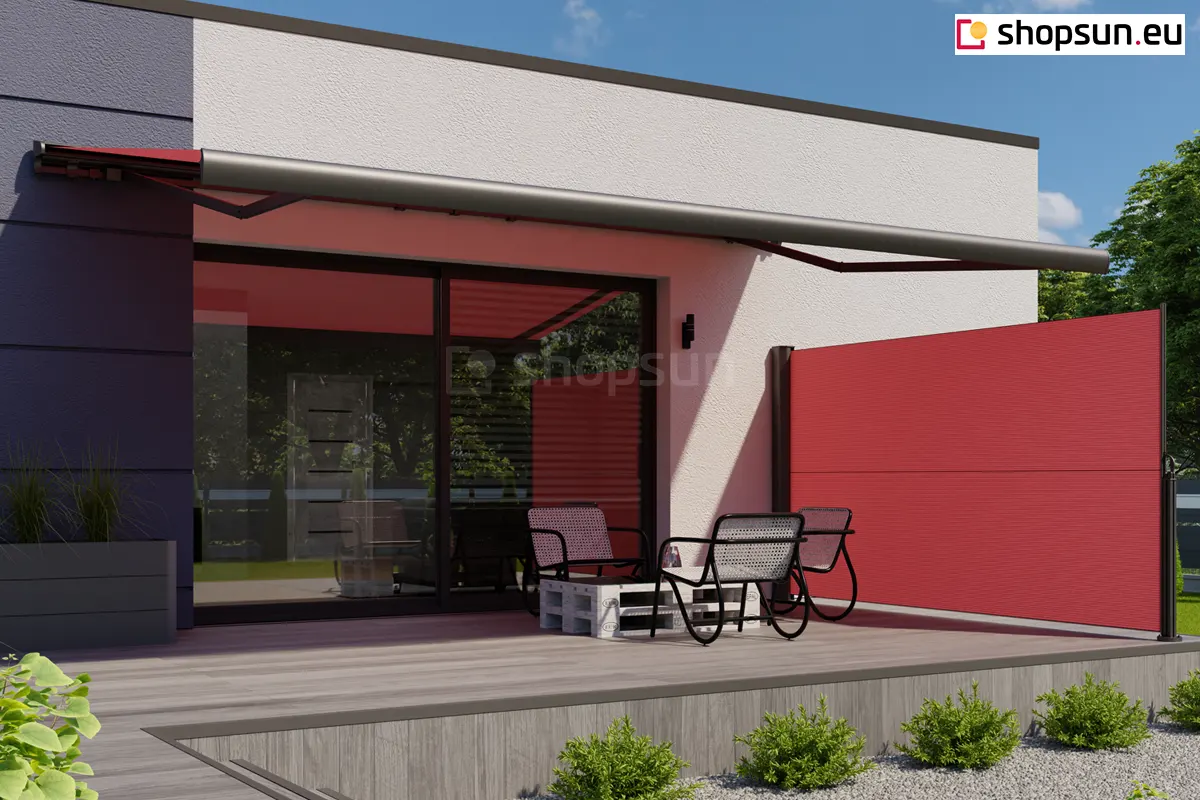
Table of Contents
The 200×300 side awning (example size) is a perfect solution for those seeking a practical and aesthetically pleasing privacy screen for their balcony or patio. Thanks to their dimensions, type, and size, side awnings provide optimal protection from wind, sun, and neighbors’ views while not taking up too much space. In the following sections of the article, you will learn more about the distinctive features of these types of awnings, their installation and operation, as well as the benefits of using them. We also present the differences between a side awning and a vertical roller blind. Additionally, you will find plenty of information about the side awnings available in our offer.
What is a side awning?
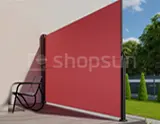
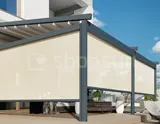
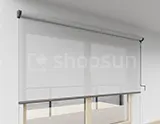
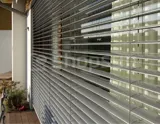
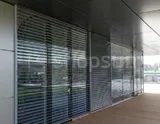
The side awning, also known as a balcony privacy screen, is a type of screen used on patios, balconies, or verandas. Its main purpose is to protect against the sun, wind, and unwanted glances from neighbors. It is characterized by a vertically mounted cassette on the wall, from which the awning fabric is extended. In this form, it resembles beach screens, eagerly used by beachgoers along the Polish coast. With this type of screen, you can feel like you are at the Baltic Sea on your own patio or in your garden.
Side Awning: Definition and Application
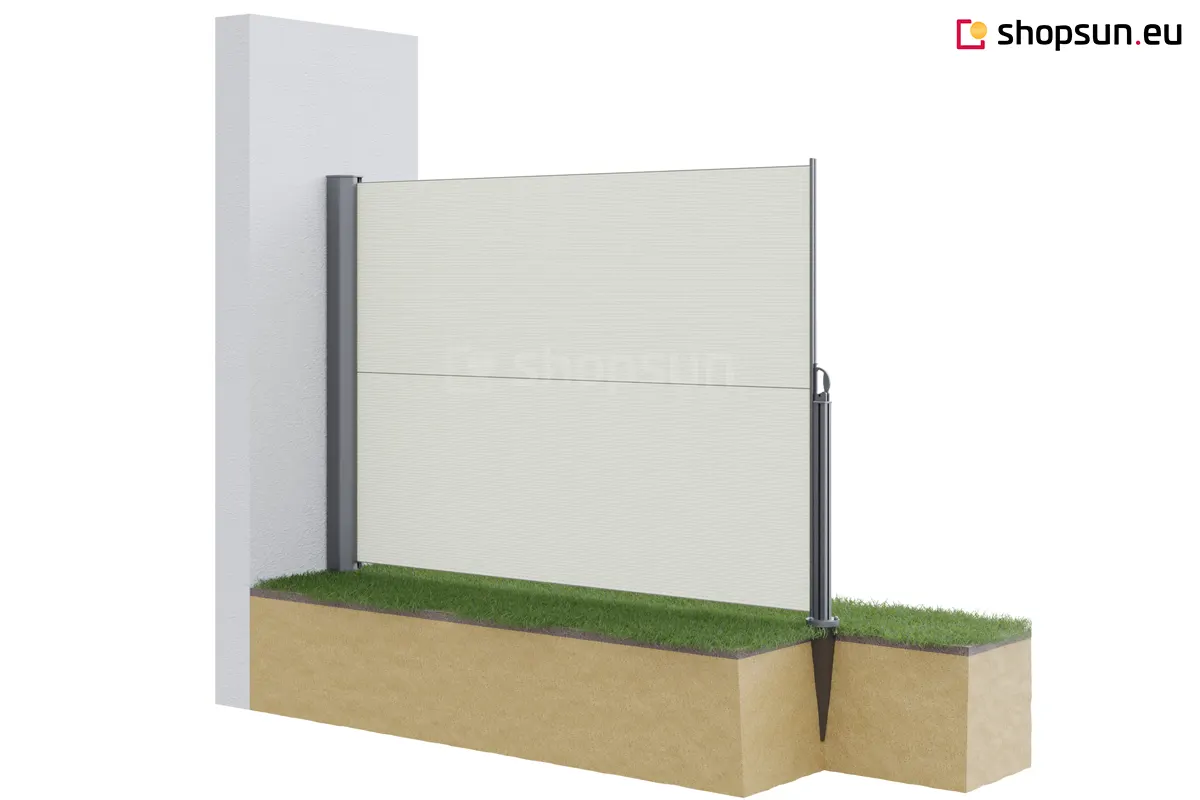
The discussed awning models are screens made of fabric, which are mounted in a cassette to the building wall or another structural element. These products are equipped with a cassette made of extruded aluminum, which effectively protects the rolled-up fabric. There are several models of this type of screens available on the market, differing in both maximum dimensions and mounting methods. We will address these issues a bit later.
The basic functions that vertical screens fulfill include:
- protection from the sun and UV radiation,
- protection from wind and rain,
- increased privacy on the patio,
- improvement of the outdoor space aesthetics.
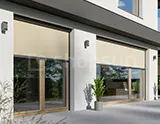
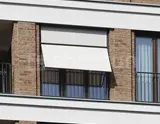
Thanks to the possibility of mounting the awning cassette on the wall and various types of mounts (posts, wall brackets), this type of awning works perfectly on balconies, patios, and restaurant gardens. They are also very often chosen as a screen for garden gazebos or patio pergolas. With posts mounted on soft ground, the awning can also be attached to the house wall and extended onto grass or other soft surfaces.
Differences Between a Side Awning and a Vertical Roller Blind
Although both the side awning and the traditional vertical roller blind serve similar functions, there are some differences between them. The side awning is typically made of fabric, which is mounted to the building wall or another structural element and extended horizontally, while the roller blind is suspended from the ceiling or another horizontal beam and rolled down.
Advantages of the side screen:
- ease of installation,
- applicable on soft ground,
- aesthetic appearance,
- weather resistance.
Advantages of the vertical screen:
- the ability to partially cover the surface,
- does not obstruct the view,
- suitable for indoor use as well.
The choice between the presented products depends on the individual needs and preferences of the user, as well as the conditions in which the screen is to be used. In many cases, especially where there is no possibility of suspending the cassette horizontally, the side roller blind may prove to be a more practical and aesthetic solution.
Bora Awning – The Perfect Side Screen
Side awnings in our offer include two models: Bora and Luna. This article will present the features of the first model, which is slightly more advanced and larger compared to the similar Luna. Another popular way to categorize these sun protection screens is by their application location. Below, we present the most popular types of awnings:
Aesthetics and functionality in one
The Bora model is an elegant side screen that combines aesthetics and functionality, making it an excellent solution for those who value both appearance and practical application. The Bora awning is custom-made. Its maximum height of 200 cm is sufficient to cover even large patios. It is also possible to produce this awning in other heights. The standard dimensions in this range are: 110 cm, 130 cm, 150 cm, 180 cm, and 200 cm.
The maximum possible width for the Bora model is 400 cm, which is the maximum projection for the fabric. Of course, this projection can be adjusted according to individual needs by selecting a smaller value during purchase or by installing the mount at a distance less than 4 meters from the cassette and using a partial extension of the fabric.
Rolling Mechanism and Mounting Methods
The retractable side awning is equipped with a spring-based rolling mechanism, allowing for easy and quick extension and retraction of the awning. The spring mechanism hidden in the cassette enables the smooth operation of the entire system.
For the Bora model, there are three mounting options available:
- post mounted to a hard surface, such as a terrace or balcony floor.
- post mounted to a soft surface, such as a lawn.
- Wall bracket for the awning.
Privacy and Protection on the Terrace, Balcony, and in the Garden
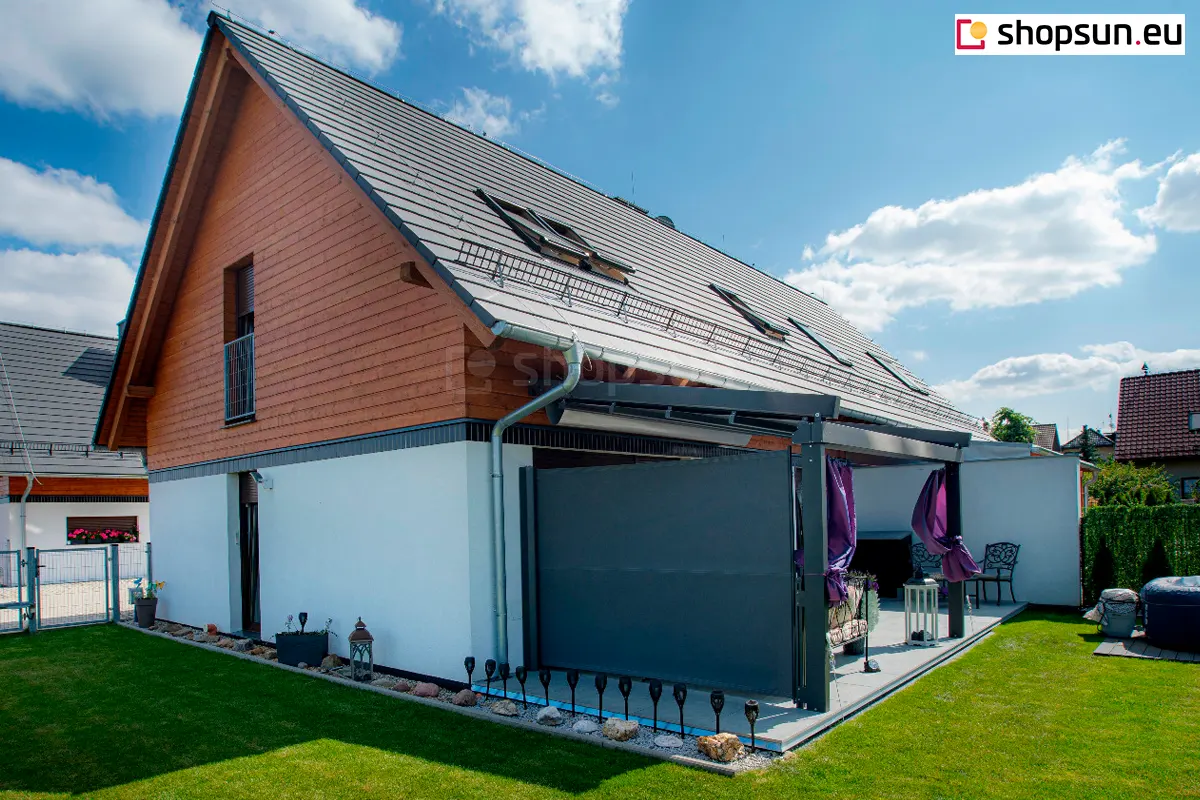
The Bora Side Awning is an exceptionally functional shading product in our offer. Due to its design and features, it provides privacy and protection on terraces or balconies, which is particularly important for single-family homes and apartments with terraces adjacent to neighboring properties. For example, the Bora awning with dimensions of 200×300 cm effectively covers a terrace, protecting it from unwanted views and weather conditions such as wind or rain. As a result, the Bora model allows for maintaining garden privacy and enhancing the comfort of outdoor spaces.
Color Options and Materials
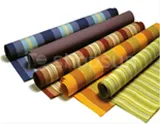
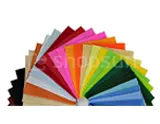
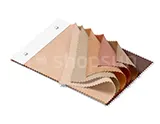
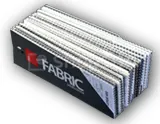
The Bora awning with a post is one of several options available for this product. All structural components are made from extruded aluminum and come in several color choices: silver graphite, white, brown, silver, and cream. The fabric covering is made from high-quality acrylic material, also used in terrace awnings. With over 150 colors and patterns available, you can perfectly match the product’s color scheme to the customer’s needs and preferences.
Installation and Operation of Side Awnings
In this section, we will discuss the installation process of the side awning, including the wall bracket and cassette mounting, as well as the operation of this type of awning.
Steps for Installing a Vertical Shade – Step by Step
The products discussed in this article feature an extremely simple installation process. The included product manual and the PDF instruction available on our website allow for quick, DIY installation of the awning on a wall or other vertical surface.
A key component of every vertical awning is the cassette mounted on the wall. It is secured using a specially prepared cassette mounting bracket. These brackets are fixed to the wall at the distances specified in the instructions (depending on the height of the cassette), and then the entire awning is hung from them.
The next step in the installation is securing the post or wall bracket at the location where the awning will be extended. It is important to ensure that the fabric is extended in a vertical alignment to ensure the proper functioning of the entire system.
Operation of the Side Awning – Simplicity and Ease of Use
As mentioned, the fabric retraction system in these shades relies on springs. Its key feature is the lightweight and smooth manual operation. To extend the fabric, you need to pull the handle located on the front beam of the cassette and draw it towards the opposite mounting point. In solutions where the fabric is attached to a post, a neodymium magnet is used to stabilize the beam to the post. In the wall-mounted version of the awning, the fabric guiding handle hooks onto a component mounted on the wall opposite the cassette.
All of this makes the presented products extremely simple and easy to use. The fabric can be easily extended, and during retraction, it is guided in such a way that the front beam does not hit the cassette. The ease of operating the entire system means that the lack of automation does not hinder its use, even for individuals with reduced physical ability, the elderly, or children.
How to Screen Off from Neighbors? How to Cover a Balcony in an Apartment? The Answer is the Functional Bora Awning! Benefits for the User
If you have a small garden, terrace, or balcony, you’ve likely wondered how to ensure more privacy in that space. Side awnings are the perfect solution for this task. The compact cassette and the flat-extending fabric allow you to create a partition or shield between your balcony and the neighboring space. The Bora model is also an ideal solution for a terrace. It allows you to divide the space into smaller areas or shield the side of the terrace, for example, from the gaze of passersby.
Thanks to the option of custom-sizing, our vertical awning models allow for a “tailor-made” solution. Additionally, with the ability to use a post mounted on soft ground, the Bora model can be used in places where other products may prove ineffective, such as on a lawn or along a fence.
Summary
In this article, we discussed side awnings as a practical and aesthetic solution for terraces and balconies. We outlined the definition and application of these types of screens, the differences between them and traditional vertical blinds, as well as the key features of the Bora model available in our store, such as elegance, functionality, the rolling mechanism, and color options. We also covered the installation and operation of these types of partitions.
In summary, the types of screens presented in the article are both aesthetic and functional solutions that provide privacy and protection from the sun, wind, and rain. With their easy retraction and extension, and resistance to UV radiation, moisture, and dirt, they enhance the comfort and privacy of outdoor spaces. Installation and operation of these products are straightforward, and correct vertical positioning ensures optimal protection.
In summary, side screens for terraces and balconies are an excellent solution for those seeking practical and aesthetic ways to manage these spaces, enhancing both comfort and privacy. They perfectly complement the shading of a terrace where a terrace awning has already been installed. Choosing models from the same manufacturer ensures a cohesive color scheme for the applied shading products, significantly enhancing the aesthetic appeal of any space.